Premium
⭐
Personal Natal Chart
Your complete astrological blueprint based on birth date, time and location.
Create Natal Chart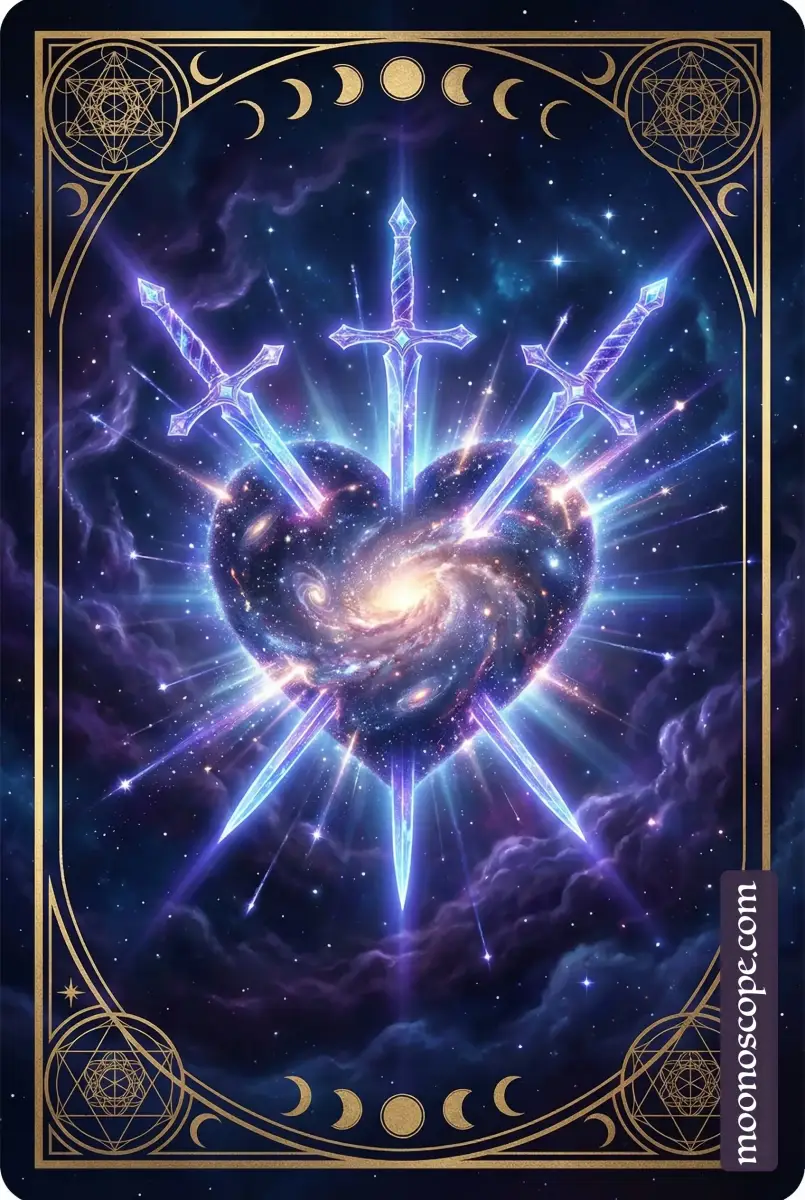
The Three of Swords is one of tarot's most sobering cards, yet it carries profound wisdom beneath its surface of sorrow. This Minor Arcana card depicts a moment of painful clarity—a necessary reckoning where illusions shatter and truth emerges, however uncomfortable. Rather than a card of simple suffering, the Three of Swords often signals a breakthrough disguised as heartbreak, inviting us to examine what must be released to move forward. In readings, it appears when difficult conversations loom, when separation becomes inevitable, or when we finally see a situation as it truly is. Understanding this card means recognizing that some pain serves a purpose: it cuts away what no longer serves us, revealing a clearer path ahead.
The Three of Swords represents heartbreak, difficult truths, and necessary separation. It signals a moment of painful clarity where illusions dissolve and honest conflict surfaces. Though traditionally associated with sorrow, this card often indicates a breakthrough through honesty, the release of what harms us, and the wisdom gained when we face reality directly.
When the Three of Swords appears upright, it speaks to a period of genuine difficulty—but one that brings clarity. This might manifest as a necessary breakup that, while painful, releases both people from an unsustainable dynamic. It can represent honest arguments that clear the air, medical diagnoses that finally explain persistent symptoms, or career transitions forced by circumstances beyond your control. The card's energy is sharp and cutting, yes, but cutting away requires precision and truth. In many cases, the Three of Swords indicates you're moving toward relief through acceptance rather than remaining in denial. This card often appears when someone is finally ready to acknowledge what they've known unconsciously for some time. The pain here is real, but it's also temporary and purposeful. Many people report that once they've experienced the Three of Swords moment—the conversation, the decision, the realization—they feel oddly lighter, as though a weight they'd been carrying has been set down.
Reversed, the Three of Swords suggests you're either avoiding necessary truths or beginning to recover from recent pain. This position can indicate that difficult conversations keep getting postponed, that you're in denial about a situation requiring honesty, or that you're holding onto hurt longer than serves you. Sometimes this reversal means the worst has passed and you're slowly rebuilding, though the process remains tender. It can also represent miscommunication—words unspoken that need voicing, or assumptions replacing actual dialogue. In some readings, reversed energy here warns against creating unnecessary drama or catastrophizing. The card asks: what truth are you still reluctant to face? What conversation are you avoiding? Alternatively, it may signal that you're moving beyond bitterness and beginning to integrate the lessons that painful period taught you.
In matters of the heart, the Three of Swords often indicates a relationship at a crossroads. For singles, it may suggest recent heartbreak or the recognition that someone isn't right for you—clarity arriving through disappointment. In existing relationships, this card frequently appears when crucial conversations have been avoided, when honesty about incompatibility or unmet needs becomes unavoidable, or when the relationship genuinely needs to end. Yet it's not always a harbinger of breakup; sometimes it represents the painful honesty that saves a partnership by clearing away resentment and pretense. The card invites authentic communication, even when words might hurt. After the Three of Swords passes, relationships either transform into something more honest or dissolve to make space for better matches. Either outcome, while painful in the moment, ultimately serves love's higher purpose.
Professionally, the Three of Swords often signals difficult workplace realities: layoffs, project failures, conflicts with colleagues, or the recognition that a job or career path isn't aligned with your values. This card can indicate necessary but painful decisions—leaving a toxic position, acknowledging you've outgrown a role, or facing performance issues directly. It may represent honest feedback that stings but proves valuable, or industry changes forcing adaptation. The Three of Swords asks you to separate emotion from fact and to act on what you genuinely understand about your professional situation. Sometimes this card appears when someone finally admits they've been in the wrong career all along and must make a significant change. While the transition is rarely comfortable, the clarity it brings often leads to better-aligned opportunities.
No, with important context. The Three of Swords suggests the answer involves difficulty, separation, or painful truth rather than straightforward yes. However, if your question concerns whether something needs to end or whether you should face a difficult reality, the answer is yes—you should.
The Three of Swords depicts three blades piercing through clouds or a heart, often shown against a stormy sky. The three blades represent multiple dimensions of pain—mental anguish, emotional suffering, and the separation of what was once whole. The clouds or stormy backdrop suggest confusion and turbulent emotion, while the darkness indicates a night that must be traversed. Some versions show the swords positioned through a heart, symbolizing how emotional pain cuts deepest. The sky itself is crucial: it's dark but not entirely black, suggesting that even in this difficult moment, dawn approaches. The precision of the swords—their sharpness, their clarity—indicates that the pain, while acute, brings truth. This is not the diffuse suffering of depression but the specific, clarifying wound of honest recognition.
The Three of Swords invites you toward difficult honesty rather than continued avoidance. Examine what truth you've been reluctant to face and consider speaking it—or hearing it—directly. This card suggests that temporary discomfort now prevents prolonged suffering later. If you're already in pain, know that this phase has a natural endpoint. Focus on what you can control: your integrity, your willingness to face reality, and your commitment to moving forward once clarity arrives. Avoid melodrama, but don't minimize genuine hurt either. This is a moment for both courage and compassion toward yourself.
✨ Premium Reports
Premium
Your complete astrological blueprint based on birth date, time and location.
Create Natal ChartPremium
Discover relationship strengths, challenges, chemistry and long-term potential.
Check Compatibility