Premium
⭐
Personal Natal Chart
Your complete astrological blueprint based on birth date, time and location.
Create Natal Chart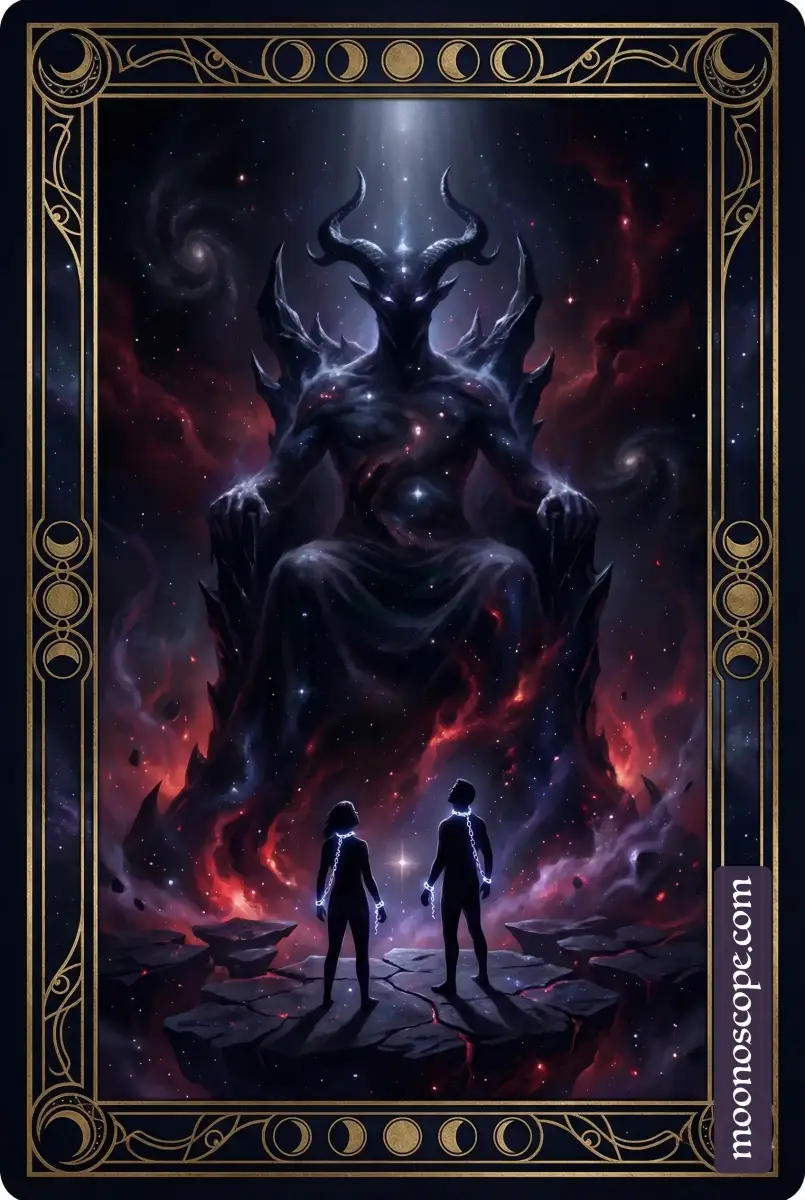
The Devil stands as the fifteenth card of the Major Arcana, representing the shadow side of human experience—temptation, bondage, and the darker impulses that bind us. This card doesn't herald evil in a supernatural sense, but rather illuminates the chains we forge through fear, desire, and denial. The Devil appears in readings to ask difficult questions: What are you refusing to acknowledge? Where have you surrendered your power? Whether upright or reversed, this card invites profound self-examination about the stories we tell ourselves and the patterns that keep us trapped. Understanding The Devil's message is essential for recognizing where liberation begins.
The Devil represents bondage, temptation, and shadow aspects demanding acknowledgment. This card signals entrapment through fear, addiction, or denial—yet paradoxically points toward freedom through honest self-awareness. It asks what you've agreed to that no longer serves you, and whether you're willing to break free.
The Devil upright speaks to the agreements we make with ourselves and others, often without realizing the cost. This card appears when you're caught in cycles—unhealthy relationships, compulsive behaviors, limiting beliefs—that feel impossible to escape. Yet The Devil's true message is more nuanced than simple bondage. It suggests you possess more agency than you believe. The chains shown in traditional imagery are often depicted as loose enough to remove, pointing toward the uncomfortable truth that we sometimes choose our prisons because they feel familiar or safe. This card can represent magnetic attraction and intensity, the seductive pull of something you know isn't good for you but pursue anyway. In life situations, The Devil might indicate financial entanglement, power imbalances in relationships, or professional situations where you've compromised your values. The card invites you to examine what you're gaining from staying stuck—the secondary benefits that keep you bound—and whether the cost has finally become too high. Recognizing these patterns is the first step toward reclaiming your freedom.
The Devil reversed suggests loosening grip and breaking free from what has held you captive. This position often indicates emerging awareness of unhealthy patterns, a growing unwillingness to accept less than you deserve, or actual liberation from cycles that have plagued you. Reversed, The Devil can represent recovery from addiction, leaving toxic relationships, or finally speaking truths you've long suppressed. However, this card reversed isn't always triumphant—it can also signal denial of necessary boundaries or minimization of real problems. You might be avoiding confrontation with difficult truths about yourself or others, or refusing to acknowledge legitimate warnings. The reversed Devil asks whether you're moving toward genuine freedom or simply running from accountability. It can indicate that someone is losing their grip on you, or that manipulative dynamics are losing power. In some readings, it suggests you're becoming aware of manipulation—either that you've been subjected to it or that you've been perpetuating it. The key is discerning whether you're truly liberated or merely in transition, still vulnerable to repeating the same patterns under different circumstances.
In love readings, The Devil often reveals the intensity and magnetism that draws people together—but also the unhealthy dynamics that can undermine genuine connection. For singles, this card might indicate attraction to someone unavailable or emotionally unavailable, or recognition that you're seeking validation through romantic connection rather than self-worth. In existing relationships, The Devil can point to power imbalances, manipulation, or passion that has curdled into control. It asks honest questions: Are you staying because you love this person, or because you fear being alone? Is this relationship enhancing your life or diminishing it? The card isn't necessarily a warning to leave, but rather an invitation to see clearly. Sometimes The Devil appears to show the intensity and raw desire between partners—the intoxicating pull that can be both exhilarating and destabilizing. Reversed, The Devil suggests breaking free from unhealthy patterns, either through honest communication and transformation or through leaving. It can also indicate that manipulative dynamics are dissolving, or that you're developing healthier boundaries.
The Devil in career readings often signals entanglement in professional situations that compromise your integrity or well-being. You might be staying in a job for security despite ongoing mistreatment, or pursuing advancement through ethically questionable means. This card can represent workplace power dynamics where someone holds influence over you, or situations where ambition has become obsessive. The Devil might also appear when you're caught between financial need and personal values, or when you've made professional agreements that increasingly feel constraining. In business partnerships, it can indicate manipulation or hidden agendas. Yet The Devil also speaks to the seductive pull of success and status—the willingness to sacrifice personal life, health, or principles for achievement. Reversed, this card suggests breaking free from professional entrapment, either through finding new employment, renegotiating terms, or finally addressing systemic problems you've tolerated. It can indicate career liberation, ethical reclamation, or the decision to prioritize well-being over status. The key is recognizing where you've surrendered agency and reclaiming it.
The Devil typically suggests Maybe or No. While not an absolute prohibition, this card warns against moving forward without addressing underlying concerns. If you're asking about something that feels binding or compromising, the answer leans toward caution. Reversed leans slightly toward Yes if the question involves breaking free or changing course.
The Devil's visual language carries profound psychological weight. The figure itself—often depicted as a horned, goat-legged being—merges human and animal nature, representing instinct unbridled by consciousness. The chains binding the figures below symbolize self-imposed bondage; they're typically shown loose enough to remove, emphasizing complicity in one's own entrapment. The inverted pentagram on the Devil's forehead inverts the upward-pointing star of spiritual aspiration, suggesting spiritual inversion or denial. The torch or flame often held aloft represents knowledge withheld or distorted—illumination used to deceive rather than clarify. The dark background symbolizes the unconscious, the hidden aspects of self we refuse to examine. Together, these elements create a card about shadow integration—not evil, but the disowned parts of ourselves that gain power precisely through denial.
The Devil's counsel is unflinching: Look at what you're refusing to see. Name the patterns that bind you, acknowledge the secondary gains keeping you stuck, and assess whether the cost has become unbearable. This isn't about shame or self-judgment, but clear-eyed honesty. Consider where you've abandoned your own agency or compromised your values. The card suggests that liberation begins with acknowledgment, not escape. Ask yourself what would change if you believed you deserved better, and what single step you could take toward reclaiming your power.
✨ Premium Reports
Premium
Your complete astrological blueprint based on birth date, time and location.
Create Natal ChartPremium
Discover relationship strengths, challenges, chemistry and long-term potential.
Check Compatibility