Premium
⭐
Personal Natal Chart
Your complete astrological blueprint based on birth date, time and location.
Create Natal Chart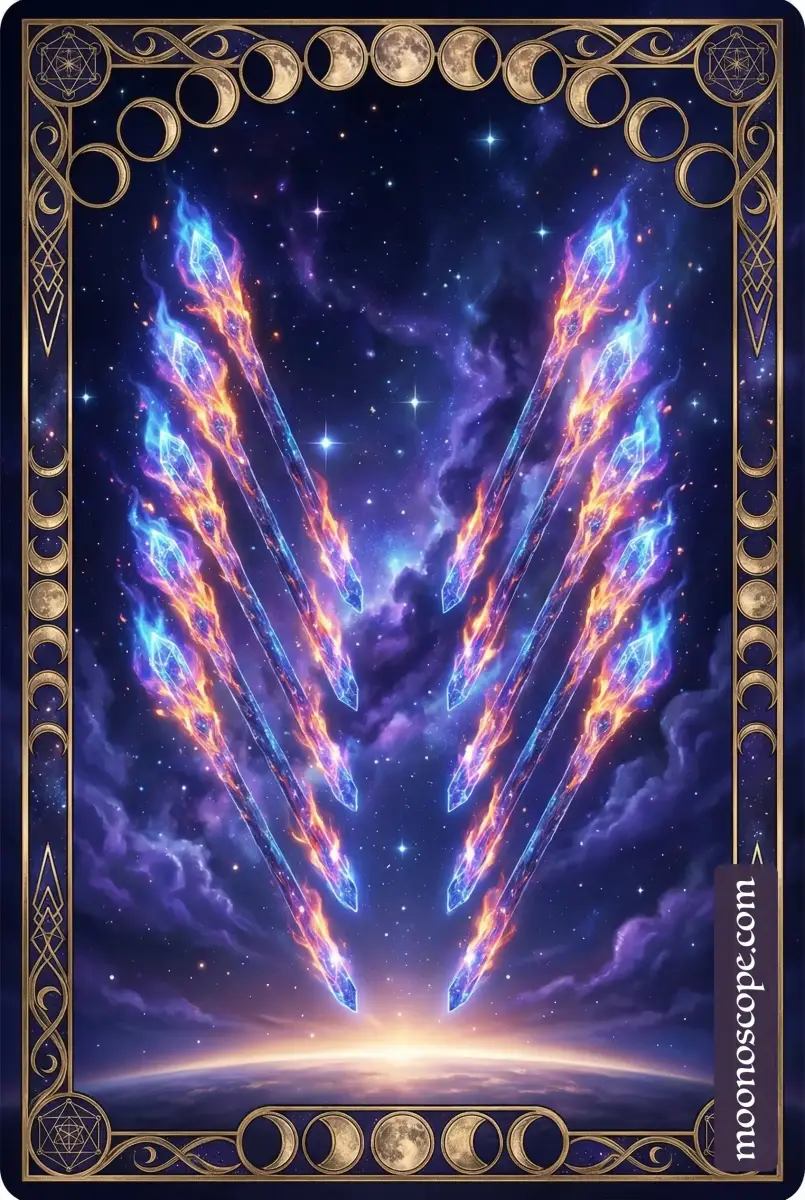
The Ten of Wands arrives in readings as a mirror held up to the weight we carry. This minor arcana card depicts the moment when enthusiasm and effort have accumulated into something heavier than anticipated. Rather than a card of failure, it speaks to the consequences of success—the responsibilities that follow accomplishment, the obligations we've gathered, and the burnout that comes from saying yes too often. Understanding the Ten of Wands means recognizing when ambition has tipped into exhaustion, when passion has become pressure, and when the only wise choice is to set some burdens down. It's a card about recognizing limits, reassessing priorities, and understanding that not every weight we carry is ours to bear.
The Ten of Wands represents burden, responsibility, and overcommitment. It signals that you've taken on too much and exhaustion is setting in. While the card can indicate hard work bearing fruit, it primarily warns against spreading yourself too thin and encourages you to evaluate what truly deserves your energy.
When the Ten of Wands appears upright, you're likely carrying more than your fair share. This card often emerges for people who've succeeded in their endeavors but now find themselves managing the weight of that success. Perhaps you've built something meaningful at work, taken on leadership responsibilities, or committed to multiple projects simultaneously. The energy here is one of momentum meeting friction—you've proven capable, which means more keeps landing on your shoulders. This card can also represent the final stretch before completion. You're near the finish line but tired, questioning whether the effort remains worthwhile. The Ten of Wands invites honest reflection about what you're carrying and why. Some burdens serve you; others are habits or obligations you've inherited rather than chosen. The upright position suggests you still have agency—you can redistribute tasks, delegate, renegotiate timelines, or simply acknowledge that this season of intensity is temporary. The card doesn't suggest failure; it suggests fatigue, and fatigue is a signal worth heeding.
Reversed, the Ten of Wands often indicates relief, release, or the decision to finally put something down. You may be shedding responsibilities that no longer serve you, delegating tasks you've been managing alone, or reaching the natural end of a demanding phase. There's liberation in this position—permission to stop pushing quite so hard. However, reversed can also suggest avoidance of necessary responsibility or an unwillingness to carry your fair share. Some readings show someone who's dropped important obligations, leaving others to manage the weight, or who's running from commitment when presence is needed. The reversal might also indicate that you're underestimating the work ahead, approaching challenges without adequate preparation or support. In softer interpretations, this position can mean you're learning to work smarter rather than harder, finding efficiency where you once relied on pure effort, or discovering that certain burdens were never actually yours to carry. The key is distinguishing between healthy release and unhelpful avoidance.
In love readings, the Ten of Wands often suggests that relationship dynamics have become strained by unequal effort or responsibility. One partner may be carrying more emotional labor, planning, or compromise while the other remains passive. For singles, this card can indicate that relationship seeking has become exhausting—you've invested heavily in connections that haven't reciprocated your energy. Within established relationships, the card may signal that you're sacrificing too much of yourself, managing your partner's emotions, or taking on blame that isn't yours to carry. There's often an imbalance worth addressing directly. The Ten of Wands asks whether love here feels like duty or whether genuine partnership exists. For couples willing to work through it, this card can prompt important conversations about shared responsibility and mutual support. The message isn't necessarily to leave, but to stop carrying alone.
Professionally, the Ten of Wands frequently appears when you're overextended. You may have excelled in your role, leading to expanded responsibilities, or you've said yes to projects without considering bandwidth. This card warns against the path toward burnout—long hours, competing priorities, and the sense that you're the only one capable of handling everything. It can also represent a role that's genuinely demanding right now, perhaps a promotion, a startup phase, or a complex project. If this resonates, the card encourages you to set a timeline for when conditions will improve and to protect your wellbeing in the interim. Career-wise, the Ten of Wands often signals the need for delegation, boundary-setting, or honest conversation with management about workload. The card doesn't suggest you're incapable; it suggests you're human. It may also indicate that it's time to move on from a role that demands too much and offers too little in return.
Maybe, leaning toward No. The Ten of Wands suggests that taking on this commitment would overextend you further. Before saying yes, consider whether you have genuine capacity or whether you're running on fumes. The answer depends on whether you can release other obligations first.
The Ten of Wands typically depicts a figure bent under the weight of ten wooden staffs, often struggling to carry them all or nearly dropping some. The visual tells the story immediately: there's a limit to what one person can hold, and this figure has reached it. The wands themselves represent creative energy, passion, and ambition—the very things that brought this person to this point of overwhelm. The background often shows a home or destination in the distance, suggesting that relief is possible if the person can just make it there. The crowded composition, with wands overlapping and obscuring the figure, symbolizes how accumulated responsibilities can obscure our sense of self. We become defined by what we carry rather than who we are. The figure's posture—often slightly bent or struggling—represents the physical and emotional toll of overcommitment. Together, these elements create a portrait of burnout that's both cautionary and sympathetic.
The Ten of Wands asks you to pause and assess honestly. What are you carrying that isn't truly yours? What can be delegated, postponed, or released entirely? This isn't about laziness; it's about sustainable living. Consider which responsibilities align with your values and which ones you've inherited by default. Give yourself permission to disappoint someone—perhaps that someone is an unrealistic version of yourself. Reach out for support rather than shouldering everything alone. Sometimes the wisest action is simply setting something down.
✨ Premium Reports
Premium
Your complete astrological blueprint based on birth date, time and location.
Create Natal ChartPremium
Discover relationship strengths, challenges, chemistry and long-term potential.
Check Compatibility