Premium
⭐
Personal Natal Chart
Your complete astrological blueprint based on birth date, time and location.
Create Natal Chart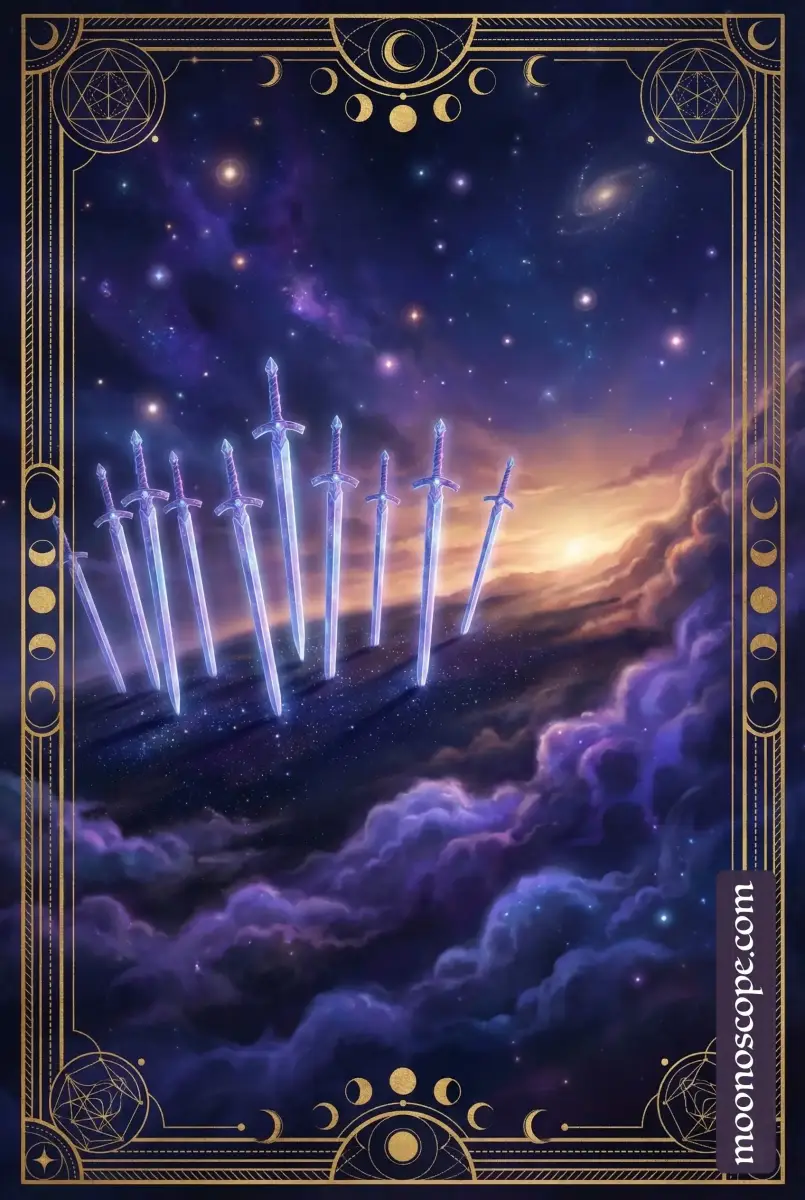
The Ten of Swords is one of tarot's most visually striking cards, depicting a figure pierced by ten blades. Rather than purely negative, this card represents necessary endings, painful truths, and the clarity that emerges from rock bottom. In readings, the Ten of Swords signals a moment of reckoning—where illusions shatter and reality becomes unavoidable. It appears when situations have reached their natural conclusion or when suffering has exhausted itself. Understanding this card's nuance matters: it's not about the pain itself, but what becomes possible after acceptance. We'll explore how this card manifests in upright and reversed positions, its particular influence on love and career matters, and what practical wisdom it offers.
The Ten of Swords represents endings, betrayal, painful truths, and mental anguish reaching a breaking point. This card signals that a difficult chapter has finished or is finishing, often bringing clarity after confusion. While traditionally dark, it also marks the moment before release and the beginning of healing.
When the Ten of Swords appears upright, it indicates a situation has reached its absolute nadir. This is the moment of deepest despair before dawn breaks—a necessary conclusion to prolonged struggle. The card often surfaces when someone has finally accepted a difficult truth they've been resisting: a relationship that cannot be salvaged, a job that's become intolerable, or a belief system that no longer serves them. The upright Ten of Swords carries an unexpected gift within its darkness. Once you've hit bottom, there's nowhere to go but up. This card frequently appears for those who've been through betrayal, loss, or overwhelming mental pressure. The very intensity of the crisis forces clarity. Denial becomes impossible. What emerges is acceptance—not resignation, but genuine acknowledgment of what is. In personal growth contexts, this card suggests liberation through surrender. The suffering ends not because circumstances change, but because you stop fighting what cannot be changed. People often report feeling oddly relieved when this card appears, as though permission has been granted to finally let go. The Ten of Swords marks the end of a cycle that needed to end, creating space for renewal.
The Ten of Swords reversed suggests the acute phase of crisis is passing or that you're resisting necessary endings. This position can indicate delayed reckoning—the painful truth hasn't fully landed yet, or you're clinging to a situation that's already dead. The reversal might also show that suffering is being prolonged through denial or refusal to accept what's plainly evident. Alternatively, reversed, this card can signal recovery and moving past a difficult period. If you've already experienced the Ten of Swords upright, its reversal indicates you're beginning to integrate the lesson and rebuild. The worst has passed, and you're starting to see beyond the immediate pain. In some contexts, reversed means the crisis is being avoided or minimized. A conversation that needs to happen hasn't happened. A decision that needs making is being postponed. The reversal asks whether you're truly ready to face what's before you, or if you're hoping the situation will resolve itself—which rarely works with this card's energy. The challenge is distinguishing between healthy processing and avoidance.
In love readings, the Ten of Swords often signals heartbreak, betrayal, or the painful end of a relationship. For singles, it may indicate the need to release attachment to someone unavailable or to grieve a love that wasn't reciprocated. For coupled individuals, this card can represent infidelity, broken trust, or the recognition that a partnership has become destructive. Yet the Ten of Swords also carries a redemptive message in love: sometimes the deepest pain teaches us what we truly need and deserve. The card appears when illusions about love dissolve. You may finally see someone clearly—their limitations, their inability to meet you—which, though painful, is liberating. Reversed in love readings, this card suggests healing from past wounds, moving beyond betrayal, or the moment just before a difficult conversation. It can also indicate that a relationship conflict is beginning to resolve, though not without cost. The reversed position asks whether you're ready to forgive, move forward, or close this chapter.
The Ten of Swords in career matters often indicates job loss, workplace betrayal, or the realization that a career path isn't sustainable. This might be sudden—a layoff or firing—or gradual recognition that you've outgrown a role or that your workplace values don't align with yours. The card signals that something must end. Professionally, this card can also represent the clarity that comes from hitting a wall. Sometimes we need the crisis to force necessary change. If you've been ignoring signs that a position is wrong for you, the Ten of Swords demands attention. The upright position suggests that denial is no longer possible; action becomes inevitable. Reversed, this card may indicate recovery from professional setback, the end of a difficult work situation, or moving toward a fresh start. It can also suggest that you're beginning to process workplace trauma or betrayal. In some readings, it shows someone finally ready to leave an untenable situation after months or years of deliberation. The reversed Ten of Swords asks: what becomes possible now that this chapter is closing?
No—or not yet. The Ten of Swords generally signals that circumstances are not aligned for a positive outcome, or that an ending is necessary before progress can happen. If asking about a relationship or situation, the answer is often closure rather than continuation.
The Ten of Swords depicts a figure lying face-down, pierced by ten blades, with a dark sky overhead. The ten blades represent complete penetration—nothing is hidden, nothing is spared. The figure's prone position suggests surrender or defeat, yet also rest. The dark sky may lift; the swords cannot be removed by force, only by acceptance. Each sword carries weight: they're not scattered but deliberately placed, suggesting that this suffering has meaning or at least inevitability. The finality of ten—completion, the end of a cycle—distinguishes this from lesser sword cards. Symbolically, the Ten of Swords represents the moment when mental anguish, conflict, or harsh truth reaches its absolute peak. The body's stillness suggests that struggle has ceased. Psychologically, the card depicts the exhaustion that comes from fighting reality, and the strange peace that follows surrender.
The Ten of Swords advises acceptance and release. If you're in acute pain, know that this intensity cannot sustain itself indefinitely. The card encourages you to stop fighting what cannot be changed and to trust that endings create space for new beginnings. Don't prolong suffering through denial or false hope. Face the truth clearly, grieve fully, and then slowly begin to rebuild. This is not about positivity or forcing gratitude—it's about honest acknowledgment of where you are and what must change.
✨ Premium Reports
Premium
Your complete astrological blueprint based on birth date, time and location.
Create Natal ChartPremium
Discover relationship strengths, challenges, chemistry and long-term potential.
Check Compatibility