Premium
⭐
Personal Natal Chart
Your complete astrological blueprint based on birth date, time and location.
Create Natal Chart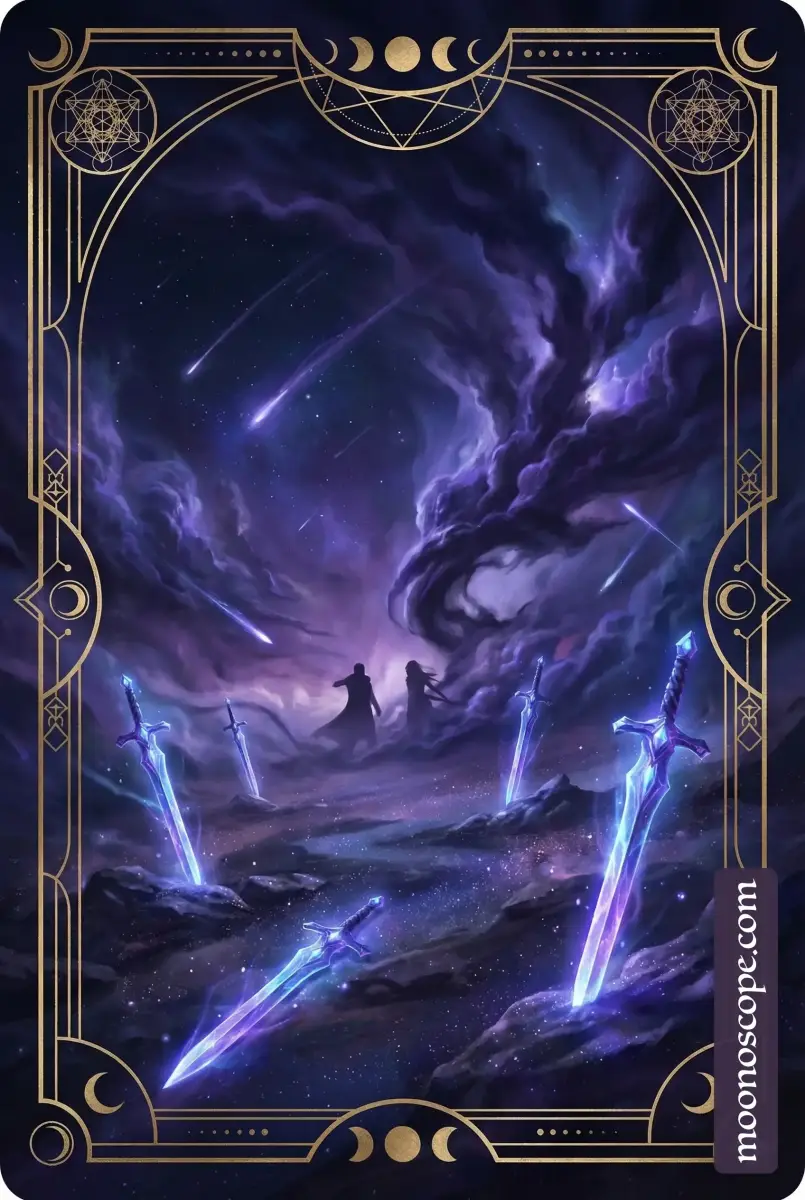
The Five of Swords depicts a moment of hollow victory—a battle won at tremendous cost. In tarot, this card represents conflict, defeat, and the painful clarity that comes when disputes end without real resolution. Unlike cards that promise triumph, the Five of Swords asks us to examine what we've actually gained when we've fought hard for something. It appears in readings to highlight tension, loss, or the aftermath of disagreement, inviting reflection on whether winning was truly worth the price. Understanding this card means recognizing when to step back from conflict and when to accept difficult truths about our circumstances.
The Five of Swords speaks to conflict, loss, and difficult endings. It suggests a situation where victory feels hollow, where compromise has failed, and where someone—perhaps you—must face the consequences of confrontation. This is a card about recognizing when a battle cannot be won and choosing wisdom over stubbornness.
Upright, the Five of Swords reveals a landscape of conflict where the dust has settled, but satisfaction remains elusive. You may have won an argument or dispute, yet the victory rings hollow. Relationships suffer, trust fractures, and the emotional cost outweighs any practical gain. This card often appears when you're defending a position that, deep down, you know is damaging to preserve. It can also represent being on the receiving end of defeat—experiencing loss, humiliation, or the sting of being wrong. In either role, the Five of Swords calls attention to the futility of certain battles. Sometimes it signals that you're caught in a cycle of conflict that serves no one. The card invites honest assessment: Is this worth the wreckage it's creating? Upright, it frequently appears in readings about workplace tensions, family rifts, or personal disputes where both sides have dug in and neither will yield. It's a reminder that not every fight deserves your energy, and that walking away with grace often requires more strength than continuing to fight.
Reversed, the Five of Swords softens slightly, suggesting a move toward reconciliation or the beginning of acceptance. You may be tired of conflict and ready to lay down your weapons, even if resolution feels incomplete. This position can indicate forgiveness, truce, or the conscious decision to stop fighting a losing battle. It may represent swallowing your pride, releasing the need to be right, or recognizing that continuing to struggle only deepens wounds. Reversed, the card also speaks to moving past blame and shame—yours or others'. It can signal healing after a difficult period, though scars remain. However, this position sometimes warns against premature peace or glossing over genuine issues that need addressing. There's a difference between wisdom and avoidance. The reversed Five of Swords asks whether you're genuinely ready to move forward or simply exhausted enough to pretend the conflict never mattered.
In matters of the heart, the Five of Swords often signals conflict that threatens intimacy. For singles, it may indicate recent heartbreak or a pattern of arguments that push potential partners away. You might be holding onto bitterness from a past relationship, creating barriers to new connection. In established relationships, this card warns of unresolved tension, communication breakdown, or a pattern where one partner consistently 'wins' arguments while emotional connection erodes. The Five of Swords asks whether you're defending your position at the expense of your relationship. Love requires vulnerability; this card appears when defensiveness has taken over. Reversed, it suggests willingness to soften, apologize, or genuinely listen. Both positions invite honest questions: What am I protecting? What am I losing in the fight to be right?
Professionally, the Five of Swords points to workplace conflict, competitive dynamics that turn toxic, or a pyrrhic victory in negotiations. You may have won a raise, promotion, or project, but at the cost of damaged relationships or ethical compromise. This card also appears during layoffs, difficult departures, or situations where you've been undermined by colleagues. It warns against cutthroat tactics that might advance you short-term but poison your reputation. Upright, assess whether your current path is worth its human cost. Reversed, the card suggests moving past workplace feuds, finding new employment that better suits you, or rebuilding professional relationships. Career growth built on conflict rarely sustains itself. The Five of Swords reminds you that your integrity and peace of mind are assets no promotion can replace.
No. The Five of Swords suggests conflict, loss, or an outcome that feels like defeat. Even if technically 'yes,' the cost will be high. Consider whether proceeding serves your genuine interests.
The Five of Swords typically shows a figure gathering fallen blades while others depart in defeat or despair. The sky is often grey or turbulent, reflecting emotional turmoil. The scattered swords symbolize the scattered nature of conflict—sharp, dangerous, and difficult to gather whole again. The figure's posture may convey triumph, exhaustion, or both simultaneously. The absent or departing figures represent disconnection and isolation that comes from dispute. Symbolically, swords represent thought, communication, and intellect; five swords suggest mental conflict taken to extremes, where logic and argument have replaced empathy. The visual composition emphasizes fragmentation—nothing is integrated or at peace. This reinforces the card's message that conflict, no matter who 'wins,' fragments relationships and wellbeing.
Step back and honestly assess what you're fighting for and what you're fighting to protect. Ask yourself whether winning this particular battle will actually improve your life or simply wound it differently. Consider the possibility that walking away with dignity is stronger than continuing to fight. If you're already defeated, allow yourself to grieve and learn from it without shame. Seek paths toward understanding, even if full reconciliation isn't possible. Sometimes the bravest choice is admitting that some battles cannot be won and shouldn't be fought.
✨ Premium Reports
Premium
Your complete astrological blueprint based on birth date, time and location.
Create Natal ChartPremium
Discover relationship strengths, challenges, chemistry and long-term potential.
Check Compatibility